
AI assessment grading built for South African classrooms and universities.
Cleverly ingests course materials, generates rubrics from memos, and grades handwritten submissions with transparent evidence. Built for local assessment realities, from high school teachers to university lecturers.
Pilot fit checklist
We are currently onboarding institutions that need speed, consistency, and traceable grading decisions.
Designed for the full assessment workflow.
Cleverly combines course context, rubric engineering, grading intelligence, and moderation tools into a single platform so departments can scale high-quality assessment without losing academic rigor.
Materials ingestion, embeddings, and semantic retrieval keep grading grounded in your syllabus.
Automated rubric construction with editable marks, expected answers, and memo alignment.
Automatic pattern detection after corrections, with semantic embeddings for alternative answers.
Group similar responses to batch grade quickly, like a supercharged moderation flow.
Review-first, AI-assisted, and spot-check modes let you set the trust level per assessment.
Accuracy metrics, bias detection, audit queues, and consistency reporting for quality assurance.
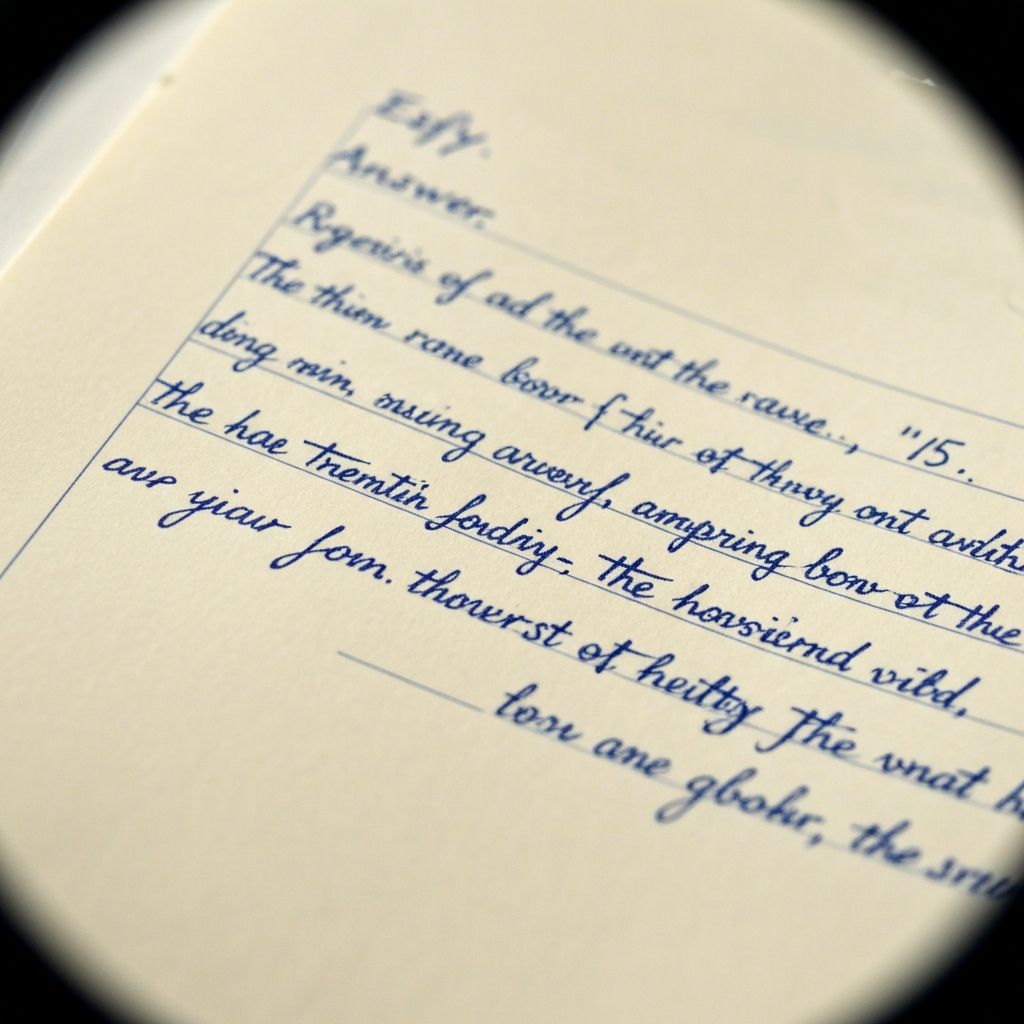
Sample handwritten capture
OCR extracts answers and preserves evidence locations for feedback and moderation.
How it works
A teacher-led workflow that keeps academic judgment at the centre.
- 1Step
Ingest course context
Upload study guides, textbooks, and extra materials so the grader understands your curriculum and expectations.
- 2Step
Upload test + memo
Provide question papers and memoranda so Cleverly can generate a structured rubric and mark allocation.
- 3Step
AI drafts rubric & reasoning
Cleverly produces per-question expectations, allocates marks, and generates a short understanding for each answer.
- 4Step
Review, calibrate, and approve
Educators edit the rubric, set grading mode preferences, and optionally run calibration on ground-truth scripts.
- 5Step
Upload student scripts
Batch upload scanned PDFs or phone captures. The OCR pipeline extracts answers with a fallback chain.
- 6Step
Grade, audit, export
AI grades with evidence, reasoning chains, and counterfactuals. Review, audit, and export results to Excel or CSV.
Why Cleverly is stronger.
Built for real assessment workflows, not just AI demos. Cleverly is optimised for consistency, transparency, and scale across South African institutions.
Cleverly vs Industry Leader
| Dimension | Cleverly | Industry Leader |
|---|---|---|
| How it learns | Automatic pattern detection after 3+ corrections; stores patterns as embeddings for semantic matching. | Primarily rubric-guided adaptation with manual intervention for nuanced edge cases. |
| Pattern types | 4 types: mark adjustment, keyword importance, alternative answers, strictness. | Mostly rubric-level adjustments. |
| Explainability | Reasoning chains, evidence boxes, and counterfactual analysis. | Reasoning summaries and rubric references. |
| Preference controls | 8+ explicit settings (strictness, tone, partial credit, evidence specificity, etc.). | Fewer explicit controls, more implicit behaviour. |
| Clustering | Groups similar answers for batch grading (like Gradescope). | Limited or workflow-dependent clustering support. |
| Grading modes | Review-first, AI-assisted, Spot-check. | Typically one or two fixed grading modes. |
| Calibration | Ground-truth submissions, accuracy metrics, bias detection. | Calibration tooling varies by plan and setup. |
| RAG context | Course materials inform grading decisions. | Often centred on rubric context only. |
| OCR robustness | Multi-step fallback chain for handwriting. | Single OCR path in most workflows. |
| Data privacy | Local OCR option, POPIA/GDPR-aligned controls. | Enterprise controls available, often region-dependent. |
POPIA/GDPR-aligned controls
Consent records, retention settings, and data subject request workflows built into the platform.
Human-in-the-loop assurance
Review-first and spot-check modes, audit queues, and rubric versioning keep humans in control.
Explainable AI
Reasoning chains, evidence snippets, and counterfactual feedback make each score defensible.
Early access offer
Join the founding cohort and shape how AI grading supports South African educators.
Need to align stakeholders?
We can provide pilot documentation, sample rubrics, and a workflow walkthrough for your department.
Share your assessment context and priorities so we can configure a relevant pilot.
We review each request manually and follow up with onboarding steps, data expectations, and timeline.
FAQ
Does Cleverly replace educators?
No. Cleverly is designed to amplify teacher judgment with explainable AI, keeping humans in control of final outcomes.
Can we use Cleverly with handwritten scripts?
Yes. The OCR pipeline handles scanned PDFs and phone images with a fallback chain for difficult handwriting.
How does Cleverly handle fairness and bias?
Calibration tools, audit queues, and explicit preference controls let departments monitor accuracy and bias over time.